Author: Cliff Stanton (Longevity Researcher) | Medically Reviewed by: Reference at end of article. | Last Updated: December 5, 2025
🚨 The “Fit Healthy Human” Promise
We do not accept free shoes in exchange for positive reviews. Every pair has been tested for a minimum of 50 miles on concrete, trail, and gym floors. We prioritize durability and biomechanical function over hype.
| Model | Best For | Zero Drop? | Price |
|---|---|---|---|
| Vivobarefoot Primus Top Pick |
Gym / Lifting | ✅ Yes | $160 |
| Xero Shoes Prio | Budget | ✅ Yes | $89 |
| Lems Primal 3 | Transition | ✅ Yes | $125 |
Most modern shoes are essentially coffins for your feet.
If you look at an infant’s foot, it is widest at the toes. If you look at a modern running shoe, it tapers to a point. For the last 40 years, the footwear industry has been squeezing our feet into rigid casts that deactivate intrinsic arch muscles and force our big toes inward.
The “Minimalist” (or Barefoot) shoe movement is the antidote. Research published in Nature (2021) showed that walking in minimalist shoes for six months increased foot muscle strength by 57.4%—roughly equivalent to doing foot gym exercises, just by walking.
But there is a catch.
If you switch from supportive, high-drop shoes to thin-soled barefoot shoes overnight, you risk injury. Your Achilles tendons have shortened from years of wearing raised heels, and your plantar fascia is not ready for the load.
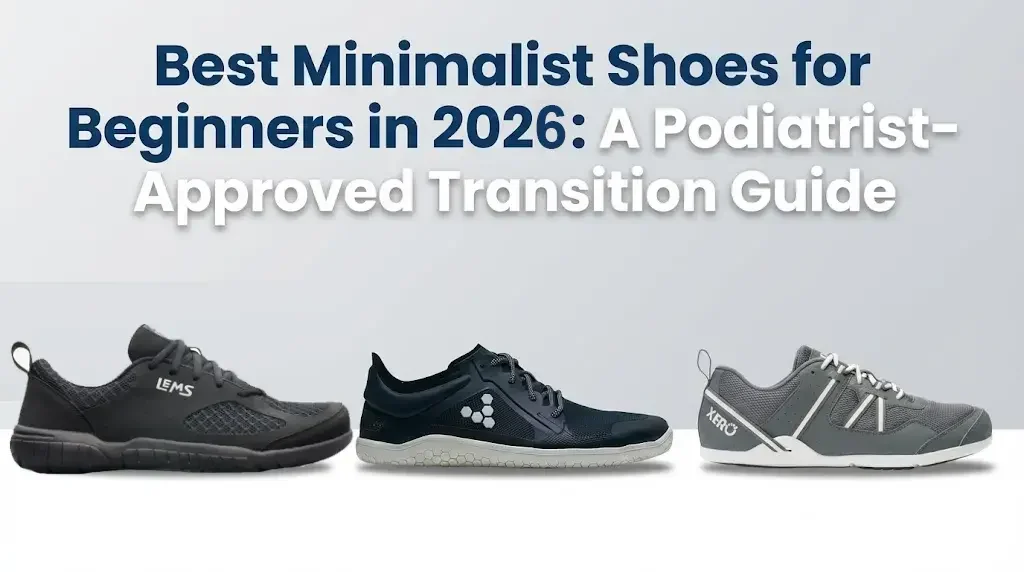
Here are the best minimalist shoes for beginners in 2025, and the specific transition protocol you need to build functional longevity without pain.
Minimalist vs. Traditional Shoes: Understanding the Biomechanics
Before you buy, you must understand why you are switching. This isn’t just about fashion; it’s about physics.
| Feature | Traditional Shoe (The Problem) | Minimalist Shoe (The Solution) |
| Toe Box | Tapered/Narrow (Causes Bunions) | Anatomically Wide (Allows Splay) |
| Heel Drop | 8-12mm Lift (Shortens Calf) | Zero Drop (Aligns Posture) |
| Sole | Rigid/Stiff (Atrophies Muscles) | Flexible (Engages Proprioception) |
| Feedback | Muted (Numb Ground Feel) | High (Improves Balance) |
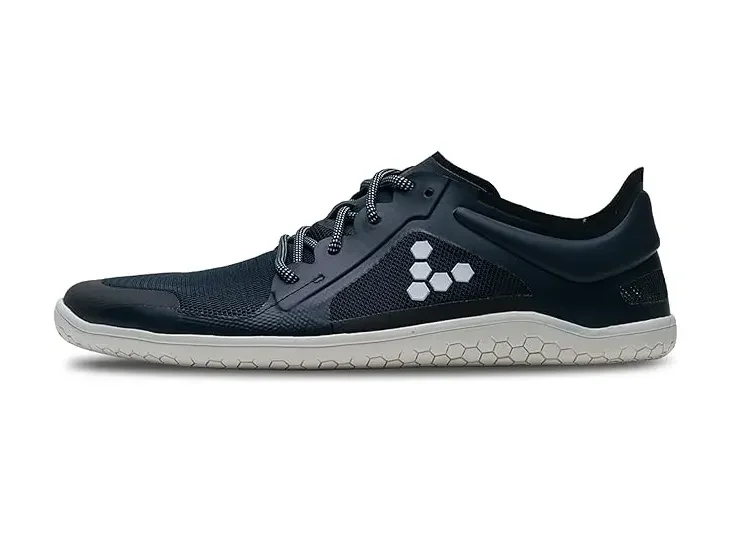
- Rating: 4.8/5
- Pros: Incredible durability, repairable (Revivo program), superior ground feel.
- Cons: Expensive ($160+), steep learning curve for beginners.
- Best For: Lifting, CrossFit, Walking.
1. Best Overall: Vivobarefoot Primus Lite III
The gold standard for durability and ground feel. Best for gym work and daily lifestyle.
The Review: If you are willing to invest in one high-quality pair to wear to the gym and around town, this is it. Vivobarefoot offers the best “proprioceptive feedback” (ground feel) in the industry. The sole is puncture-resistant but incredibly thin, forcing your nervous system to engage with the ground.
- Durability: 9/10. We have pairs that have lasted 3+ years of daily use.
- Width: Moderate-Wide. Fits 90% of foot shapes.
- The Cons: They are expensive and rarely go on sale.
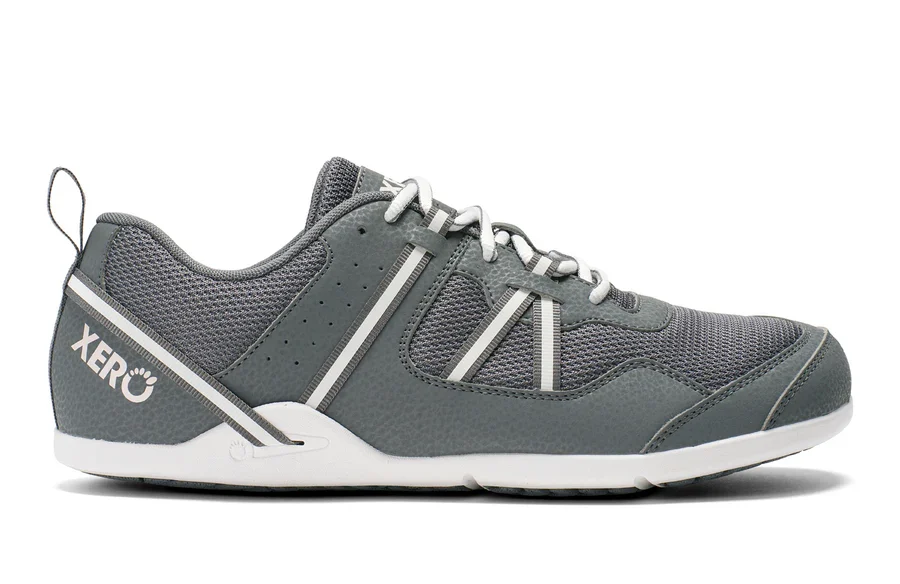
- Rating: 4.5/5
- Pros: Affordable (<$90), 5,000-mile sole warranty, beginner-friendly cushion.
- Cons: Aesthetics are polarizing, less breathable than knit shoes.
- Best For: General fitness, budget-conscious beginners.
2. Best Budget Entry: Xero Shoes Prio
The “Gateway Drug” to natural movement. Affordable and versatile.
The Review:
You don’t need to spend $160 to start your journey. Xero Shoes was founded on the principle of affordable natural movement. The Prio features a slightly thicker sole (5.5mm) than the Vivos, which provides a tiny buffer for beginners not used to concrete.
- The Fit: High volume. Good for people with “tall” feet.
- The Feature: Reflective heel and instep straps allow you to lock your midfoot in while leaving toes free.
- The Cons: They look a bit “techy” and less stylish than the Vivos.
- Rating: 4.8/5
- Pros: Extremely comfortable, new wider outsole base, forgiving on concrete.
- Cons: Sole is softer (wears down faster on rough pavement than Vivobarefoot).
- Best For: All-day standing, casual wear, first-time transitioners.
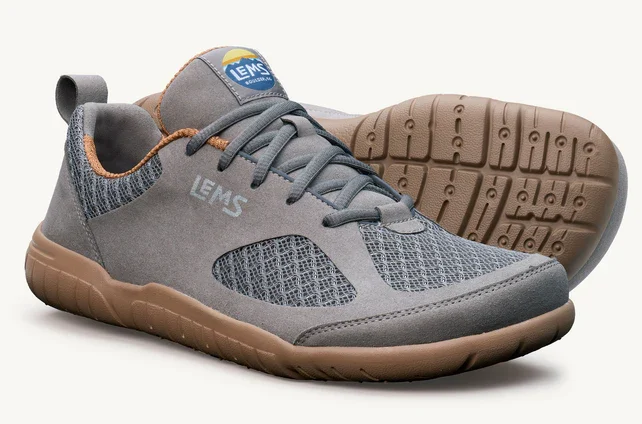
Best Transition Shoe: Lems Primal 3
The newly updated bridge between “Normal” and “Barefoot.”
The Review:
If the idea of a super-thin sole scares you, or if you work on concrete floors all day, start here. The Primal 3 is the successor to the legendary Primal 2. Lems kept what worked (the Zero Drop and the Wide Toe Box) but widened the outsole slightly for even better stability and traction.
- Why it works: You get the posture benefits of zero-drop and the toe splay benefits, but with a 9mm stack height. This air-injected rubber offers “cushion” that protects beginners from heel pain during the transition.
- What changed from the Primal 2? A slightly wider footprint for stability and a new outsole pattern for better grip. (plus new half sizes)
- Style: Casual sneaker aesthetic. It looks normal in a coffee shop.
The “Safe Transition” Protocol
Warning: Ignoring this section is the #1 cause of minimalist-induced Achilles tendonitis.
According to Dr. Peter Attia and leading biomechanics experts, the tissues in your lower leg need time to remodel. We recommend the 10% Rule:
- Weeks 1-2: Wear them for 1 hour a day inside the house. Do not run.
- Weeks 3-4: Wear them for short errands (grocery store). Keep your old shoes for the gym.
- Weeks 5-6: Introduce them for upper-body gym days.
- Month 2+: Begin short walks.
The “Pain Check” System:
- 🟢 Muscle Soreness (Arch/Calf): Normal. Your atrophy is reversing.
- 🔴 Sharp Tendon/Joint Pain: Stop immediately. You have exceeded your tissue’s load capacity. Rest and foam roll.
FAQ: Common Beginner Questions
Q: Can I switch to minimalist shoes if I have Plantar Fasciitis?
A: Many podiatrists argue that minimalist shoes can help cure plantar fasciitis long-term by strengthening the arch muscles that support the fascia. However, the transition must be extremely slow. Switching too fast can aggravate the condition. Consult a PT before switching.
Q: Do minimalist shoes actually widen your feet?
A: Yes. Most users report their feet spreading by half a size or more as their toes “un-scrunch” and return to their natural alignment. This is a sign of returning function.
Q: Can I run in these immediately?
A: No. Running generates forces up to 3x your body weight. You must relearn a “forefoot strike” running technique before running in minimalist shoes, or you risk stress fractures.
Scientific References
- Curtis, R. et al. “Daily activity in minimal footwear increases foot strength.” Nature Scientific Reports, 2021.
- Davis, I.S. “The re-emergence of the minimal running shoe.” Journal of Orthopaedic & Sports Physical Therapy, 2014.
- Wolff, J. “The Law of Transformation of Bone.” (Foundational principle regarding bone density and load).